That persistent tickle in your throat? If there is no mucus, it could be a dry cough. It usually stems from throat irritation, dust exposure, allergens or seasonal changes. It tends to worsen at night when the throat has less natural moisture, making it feel relentless and uncomfortable.
Because there is nothing to expel, a formula built only for chest congestion may not help. What a dry cough needs are one soothing, anti-inflammatory support for the throat itself, along with herbs that suppress the urge to cough repeatedly.
Not every bottle labelled "herbal" is built the same way. A well-formulated ayurvedic cough syrup for dry cough typically combines a few classical herbs, each doing a distinct job.
Mulethi (Liquorice Root): It is traditionally used as an antitussive, mulethi is known to help suppress the urge to cough.
Tulsi (Holy Basil): Widely used in Ayurveda, tulsi is traditionally associated with relief from sneezing, a runny nose and general throat discomfort.
Pudina (Mint): Known for its cooling and refreshing property, pudina is beneficial for cough and cold symptoms.
Pippali (Long Pepper): Traditionally regarded as a cough suppressant, pippali is often included in classical respiratory formulations.
Gul Banafsha (Sweet Violet): This herb is traditionally valued as an expectorant, supporting the body's natural process of clearing the airway.
A quality dry cough syrup mentions its complete ingredient list, batch number, manufacturing licence and shelf life clearly on the pack. If a label only says "herbal blend" without naming ingredients, that vagueness is worth questioning before you buy.
Adults searching for an ayurvedic dry cough medicine should also check whether the formula is genuinely non-drowsy, since many otherwise 'natural'-sounding syrups still contain sedative additives that may affect daytime routine.
For most Ayurvedic dry cough syrups, adults take 5 - 10 ml twice a day, while children between 6 - 10 years take a smaller measured dose, ideally as per physician advice. Consistency across a few days tends to matter more than an occasional large dose.
If your cough continues alongside congestion, pairing your routine with Tulsi capsules for immunity support can complement the syrup's effectiveness.
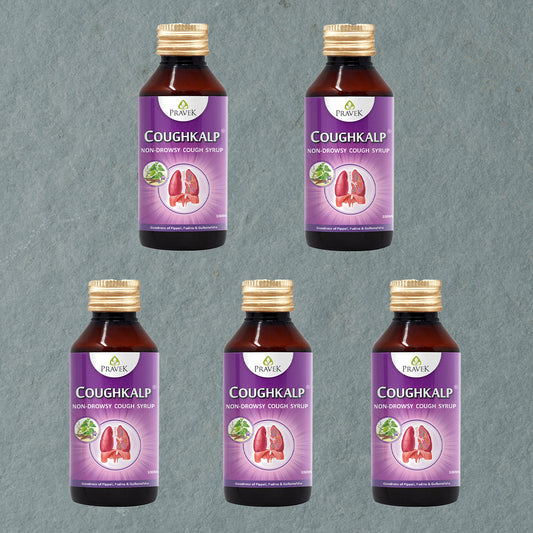
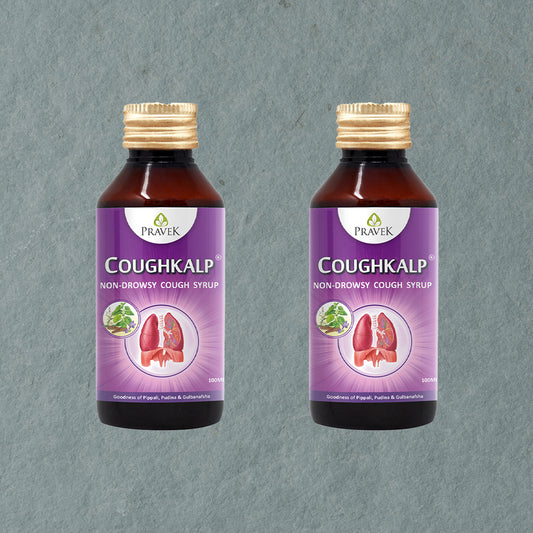
Pravek's Coughkalp brings together Tulsi, Mulethi, Pudina, Pippali and Gul Banafsha in one non-drowsy formula built without alcohol or added sedatives. It carries ISO-certified and GMP-certified manufacturing standards, which matters when you are choosing a dry cough syrup for regular use.
| Also Read: Coughkalp: Your Natural Ayurvedic Solution for Dry Cough Relief
For anyone comparing bottles side by side, these five herbs together is a reliable way to choose an ayurvedic cough syrup for dry cough and differentiate it from a syrup that only masks symptoms temporarily.
Choosing the right ayurvedic cough syrup for dry cough becomes easy when you read the ingredients list and manufacturing details rather than trusting the advertising claims. Tulsi, Mulethi, Pudina, Pippali and Gul Banafsha each play a specific role in soothing throat irritation and ease symptoms with regular use.
If you are ready to get rid of your dry cough naturally and looking to buy the best Ayurvedic cough syrup online, explore Pravek. Check the full ingredient list for your satisfaction and read more about Coughkalp before you place your order.
What is the best ayurvedic cough syrup for dry cough?
A formula combining Tulsi, Mulethi, Pudina and Pippali tends to work well for dry cough, since these herbs are traditionally used to ease throat irritation.
Does an Ayurvedic dry cough medicine cause drowsiness?
A genuine non-drowsy cough syrup contains no sedatives, so it can be taken during the day without affecting alertness.
Can children take Ayurvedic cough syrup for dry cough?
Children above 6 years can usually take a smaller measured dose, though a doctor's advice is recommended for younger children.
How long does a dry cough syrup take to show results?
Most people notice improvement within 7 - 10 days of regular use, though chronic cough may need longer and a physician's review.
Is Coughkalp suitable for both dry and wet coughs?
Yes, Coughkalp is formulated to support relief from both dry and wet cough using the same herbal combination.