In today's fast-paced world, solutions that work quickly and fit easily into a person’s routine are a must. Pain relief balms meet both needs. They do not require preparation, they work immediately upon application, and can be used anywhere – at home, at the workplace or while travelling.
Here is why they are so favoured:
• They are easy to apply - no mixing or measuring required.
• Travel is easy with small packaging and it’s convenient to carry them.
• They help manage a wide range of common everyday discomforts - from headaches and muscle fatigue to joint stiffness.
For many people, a good balm acts as the first line of comfort for acute and minor pains.
Ayurvedic balms have herbal ingredients that have been used in traditional medicine for centuries. Unlike synthetic products, these preparations come from plant and mineral-based compounds that are generally well-tolerated and suitable for regular use.
A well-prepared Ayurvedic balm works in the following ways:
• It deeply penetrates the skin and the therapeutic effects of its active compounds provide quick pain relief.
• Its anti-inflammatory properties help reduce swelling and chronic pain.
• It stimulates blood circulation, which speeds up recovery and eases stiffness.
• Its warming effect provides immediate sensory relief, which helps relax tense muscles.
The potency of an Ayurvedic pain relief balm is in its ingredients. Common Ayurvedic herbs that relieve pain and aid in the anti-inflammatory response are:
• Ashwagandha: Recognised widely for its effects against acute as well as chronic inflammatory reactions. It also alleviates oxidative stress in muscular tissue.
• Gandhprasarini: Traditional herb for chronic joint pain and stiffness, and it is particularly effective in the symptoms of arthritis.
• Erandmul (Castor Root): A boon in cases of headache, body pain and stiffness. It also has a mild analgesic action that supports pain management.
• Nirgundi: An Ayurveda herb mainly used in the management of joint-related problems. It has anti-inflammatory and analgesic effects.
• Rasna: Helps with the mobility of joints and provides relief from pain and swelling around the joints.
• Pudina Satva (Peppermint Extract) and Kapoor (Camphor): These ingredients help maintain circulation and facilitate rapid sensory relief.
A balm that contains multiple ingredients especially in a wax-based formulation typically delivers long-lasting relief.
With so many options available for sale, choosing the right Ayurvedic pain relief balm can be daunting. Four criteria to consider:
1. Herbal Composition
Seek for Ayurvedic medicine for pain and inflammation like balms that contain all-natural herbs and oils in their composition. Do not venture into products with ambiguous ingredient categories.
2. Texture and Absorption
A good balm is easy to apply, which deeply absorbs into the skin without leaving any heavy or greasy residue.
3. Versatility
As a best example, the balm needs to be effective for different kinds of discomfort — headaches, muscle fatigue, joint stiffness and minor sprains — in order for it to work as one trusted therapy for chronic pain relief.
4. Usage Instructions and Safety
Always take a look at the label whenever using it. Reputable Ayurvedic balms come with clear directions, precautions and a visible manufacturing date. Buying good Ayurveda products from reliable manufacturers can assure product authenticity and quality.
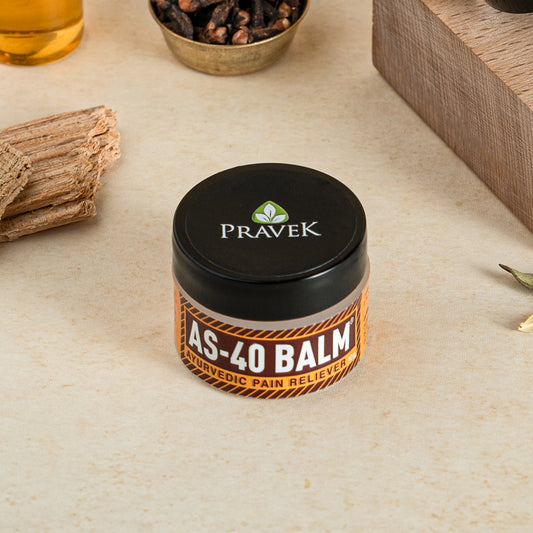
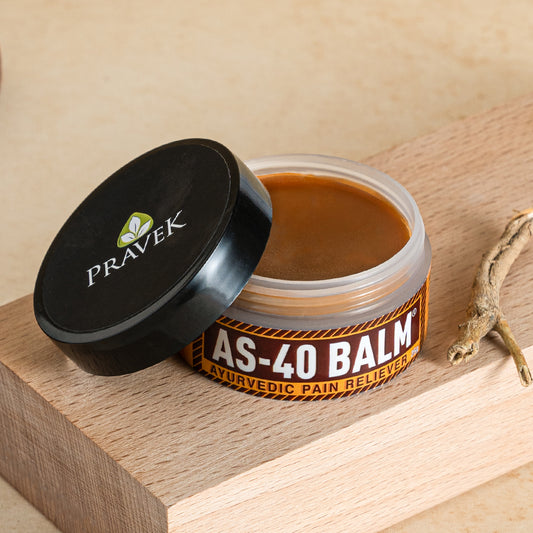
AS-40 Balm by Pravek is an Ayurvedic pain relief balm that ticks all the boxes above. Using a special blend of powerful herbs and other natural ingredients (like Ashwagandha, Gandhprasarini, Nirgundi, Rasna and Erandmul), it works wonders on joint pain and stiffness. Such ingredients in our AS-40 Balm are packed with analgesic and anti-inflammatory actions and our balm is a unique blend of 6 different herbal oils.
It’s lightweight enough to carry wherever you go, and it works well for daily use. It is equipped with a safety seal and comes in convenient 10g and 25g pack sizes. It has been used by customers for everything from common headaches to long-standing joint pain and is also available on Amazon, 1mg, Healthkart and Flipkart.
When applied right, it really matters how effective a balm is. The recommended approach is as follows:
• Apply a little balm on to the affected area (joint, muscle or temple).
• Gently massage in a circular motion, until the balm is absorbed. It also helps stimulate blood flow to the area.
• Apply 2-3 times a day, or as directed by a physician.
• For chronic or persistent pain, regular application brings better results.
Ayurvedic balms are only used topically. Avoid contact with eyes, broken skin or irritated areas.
A well-formulated Ayurvedic pain relief balm can be a practical and effective part of your everyday wellness routine - whether you are managing end-of-the-day fatigue, a nagging headache or stiffness from physical activity. The key is choosing one herbal support that is backed by quality ingredients, Ayurvedic wisdom, transparent labelling and a reliable brand.
Choosing the right balm is not just about getting short-term relief, it is about having something you can rely on.
Buy the Best Ayurvedic Pain Relief Balm!
Can I use an Ayurvedic pain relief balm every day?
Yes, most Ayurvedic pain relief balms are made for daily use. Always follow the product packaging instructions on “How to use.” or you may also consult a doctor for a tailored regimen if the pain is persistent.
What is the speed of pain-relief medicine?
Ayurvedic balms, designed for fast absorption, may help soothe the affected area after a few minutes of topical application. It relies on multiple aspects such as the type and the intensity of pain, the quality of the product and whether the balm is massaged on the affected area correctly as per the advised direction.
Where can I use a pain relief balm?
Pain relief balms like AS-40 Balm can be applied on the muscles, joints, back, neck and on the temple to relieve pain and reduce stiffness and inflammation.
Is an Ayurvedic balm safe for all kinds of pain?
Ayurvedic balms can be used for issues such as: musculoskeletal pain, headaches, soreness, muscle discomfort, slight aches, stiffness and pain in joints, and in some cases it can also be used for minor sprains. For those with severe or unaccountable pain, it is best to consult a qualified Ayurvedic physician for further treatment.